It’s happened to all of us: the lights flicker, then plunge you into darkness. Maybe it’s a storm, a utility issue, or you’re simply far off the grid. In those moments, one thought springs to mind: "I wish I had power." That's where understanding the different Types of Generators & Their Applications becomes not just useful, but essential.
Generators are the unsung heroes of energy resilience, transforming mechanical energy into the electrical power that keeps our lives running. They're vital for everything from powering medical equipment during an outage to keeping your food fresh, illuminating a remote worksite, or enabling off-grid adventures. But with so many options available, how do you choose the right one for your specific needs?
At a Glance: Your Quick Guide to Generators
- Generators come in many forms: From small, portable units for camping to massive industrial powerhouses and eco-friendly renewable systems.
- Fuel matters: Diesel, gasoline, propane, natural gas, hydrogen, and even sunlight or wind dictate efficiency, emissions, and convenience.
- Portability vs. Permanence: Decide if you need power on the go (portable) or a fixed, automatic solution for your home or business (standby).
- Sensitive electronics need special care: Inverter generators provide clean power safe for devices like laptops and smartphones.
- Eco-friendly options are growing: Solar, hydrogen, and even biodiesel generators are paving the way for greener power.
- Sizing is key: Don't under-power or over-spend. Calculate your exact wattage needs.
- Safety is paramount: Never operate fuel-based generators indoors due to carbon monoxide risks.
- Maintenance keeps them humming: Regular checks extend your generator’s lifespan and ensure reliability.
Powering Up: Understanding the Core Generator Technologies
At their heart, all electric generators convert mechanical energy into electrical energy. But how they achieve that mechanical energy, what they burn (or don't burn) to do it, and what they’re designed to power are where the differences truly emerge. Let’s dive into the core categories that define the landscape of available generators.
Fuel-Fired Generators: The Workhorses of Instant Power
These are perhaps the most common generators, relying on various fuel types to power an internal combustion engine, which then spins an alternator to produce electricity. They offer robust, on-demand power, but their differences lie in fuel efficiency, emissions, and application.
Diesel Generators: Built for Endurance
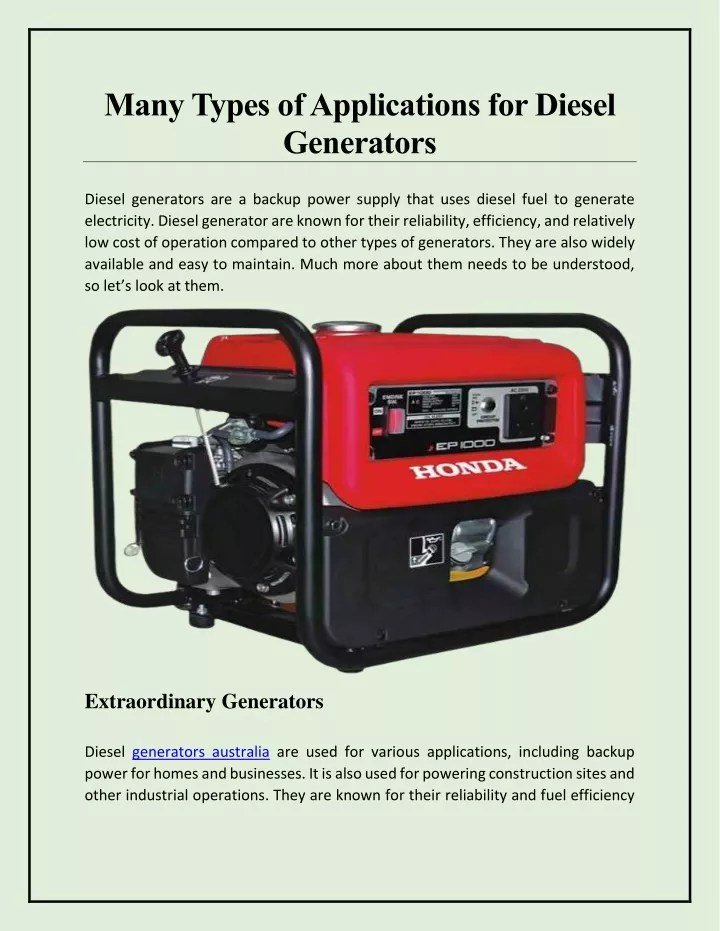
Imagine a hospital during a blackout, or a remote construction site far from the nearest utility pole. That’s where you’ll likely find a diesel generator. These powerhouses run on diesel fuel, renowned for their durability, fuel efficiency under heavy loads, and high torque at startup. They are designed for continuous power supply and prolonged heavy-duty applications.
- Pros: Highly durable, fuel-efficient for long runs, robust, excellent for heavy loads.
- Cons: Higher upfront cost, noisier, produce more emissions than some alternatives, diesel fuel can degrade over time.
- Applications: Hospitals, industrial facilities, data centers, remote mining operations, large commercial backup, disaster relief.
Gasoline Generators: Portable & Accessible Power
For many homeowners, campers, or anyone needing quick, temporary power, gasoline generators are the go-to. They’re typically smaller, lighter, and more portable than their diesel counterparts. While less fuel-efficient and producing more emissions than diesel, their accessibility and ease of use make them incredibly popular for short-term power needs.
- Pros: Relatively inexpensive, widely available fuel, highly portable (especially smaller models).
- Cons: Less fuel-efficient, higher emissions, gasoline has a shorter shelf life, generally noisier.
- Applications: Residential backup during short outages, camping, tailgating, DIY projects, powering tools on a job site.
Propane Generators: Cleaner & Longer Shelf Life
Propane generators offer a compelling alternative to gasoline, especially for those seeking cleaner emissions and easier fuel storage. Propane burns cleaner than gasoline or diesel, producing fewer carbon deposits and less harmful pollutants. Plus, propane doesn't degrade like gasoline, making it an excellent choice for backup fuel you might store for years. However, its lower energy density per volume means you might need larger tanks for extended run times.
- Pros: Cleaner burning, lower emissions, fuel has a very long shelf life, can be stored in tanks indefinitely.
- Cons: Lower energy density (larger fuel tanks needed for same run time), may be less powerful than equivalent gasoline units.
- Applications: Residential backup power, light commercial use, RVs, outdoor events where emissions are a concern.
Natural Gas Generators: Uninterrupted Supply
If you're connected to a natural gas line, a natural gas generator can be a game-changer for backup power. These permanent fixtures offer a continuous fuel source directly from your utility, eliminating the need for manual refueling or on-site fuel storage. This makes them incredibly reliable for long-term, uninterrupted power during extended outages.
- Pros: Continuous fuel supply (no refueling needed), cleaner burning than gasoline/diesel, lower operational costs if connected to utility gas.
- Cons: Requires a natural gas line connection, permanent installation, slightly lower power output compared to propane or gasoline for the same engine size.
- Applications: Whole-home standby power, commercial buildings, critical infrastructure with existing gas lines.
Hybrid (Dual-Fuel & Tri-Fuel) Generators: The Best of Both Worlds
Can't decide between gasoline, propane, or natural gas? Why not have it all? Hybrid generators offer incredible versatility by running on multiple fuel types. Dual-fuel models typically switch between gasoline and propane, while tri-fuel options add natural gas to the mix. This flexibility ensures you have power even if one fuel source becomes unavailable, making them ideal for emergencies or off-grid living where fuel access might vary.
- Pros: Maximum fuel flexibility, extended run times with multiple fuel options, often cleaner emissions on propane/natural gas.
- Cons: More complex systems, potentially higher cost, might require specific conversion kits.
- Applications: Emergency backup, RVs, remote job sites, off-grid homes, situations where fuel supply consistency is uncertain.
Standby & Portable: Where and How You Need Power
Beyond fuel types, generators are often categorized by their mobility and installation. Do you need power that follows you, or power that’s always ready at home?
Standby Generators: Always Ready, Automatically On
A permanent fixture outside your home or business, a standby generator is designed for one thing: automatic, uninterrupted power when the grid fails. Typically powered by natural gas or propane, these units connect directly to your building’s electrical system and activate within seconds of an outage. They can power an entire home or critical circuits for days or weeks, making them ideal for seamless transitions during emergencies.
- Pros: Fully automatic operation, seamless power transfer, powers entire home/business, reliable for extended outages.
- Cons: High upfront cost, professional installation required, requires a dedicated fuel line (natural gas or large propane tank), maintenance needed.
- Applications: Whole-home backup, businesses with critical operations (e.g., medical clinics, data centers), areas prone to frequent or long outages.
Portable Generators: Power on the Go
True to their name, portable generators are designed for mobility. Ranging from small 1,000-watt units to larger 10,000-watt models, these are typically gasoline-powered and manually operated. They offer flexibility for temporary power needs, but remember the crucial safety rule: never operate them indoors.
- Pros: Versatile, easy to move, relatively affordable, quick setup for temporary power.
- Cons: Manual operation, noisy, generally less fuel-efficient, safety concerns with carbon monoxide, not suitable for continuous, unattended power.
- Applications: Camping, RVs, tailgating, construction sites, outdoor events, emergency power for select home appliances during short outages.
Inverter Generators: Quiet Power for Sensitive Tech
A special class of portable generator, inverter generators represent a significant leap in technology. They produce "clean" or "pure sine wave" AC electricity, which is crucial for sensitive electronics like laptops, smartphones, and medical devices. Unlike traditional generators, inverters use advanced microprocessors to regulate power output, resulting in quieter operation, greater fuel efficiency, and a more stable power supply.
- Pros: Clean, stable power (safe for sensitive electronics), much quieter than conventional portables, highly fuel-efficient, lightweight.
- Cons: Higher cost than conventional portables, generally lower power output (though some larger inverter models exist).
- Applications: Camping, RVs, powering sensitive electronics, quiet recreational use, backup for small essential home items.
Specialized Generators for Niche Applications
Beyond the common categories, several generator types are tailored for very specific environments or purposes, from agriculture to marine adventures.
RV Generators: Comfort on the Road
Specifically designed for recreational vehicles, these compact and quiet generators provide power for all the comforts of home while you’re off-grid. They integrate seamlessly into RV electrical systems, powering everything from air conditioning to kitchen appliances.
- Pros: Compact, quiet, specifically designed for RV integration, durable for travel.
- Cons: Primarily for RV use, specific installation requirements.
- Applications: Powering RVs, travel trailers, mobile homes.
Marine Generators: For the Open Water
Harsh sea conditions demand robust equipment. Marine generators are purpose-built to withstand saltwater environments, vibrations, and continuous use on boats, yachts, and offshore platforms. They provide reliable power for navigation, communication, and onboard amenities during long voyages.
- Pros: Marine-grade construction, corrosion-resistant, designed for reliability in harsh conditions.
- Cons: Specialized and expensive, specific maintenance requirements.
- Applications: Boats, yachts, commercial vessels, offshore platforms.
PTO Generators: Farming's Flexible Friend
In agriculture, power isn't always available where you need it. PTO (Power Take-Off) generators connect directly to a tractor, using the tractor's engine as the power source to generate electricity. This makes them incredibly useful for powering machinery, tools, or even remote farm buildings when utility power is out or nonexistent.
- Pros: Utilizes existing tractor engine, portable across farm properties, robust for agricultural use.
- Cons: Requires a tractor, output limited by tractor engine, not suitable for continuous household backup.
- Applications: Remote farm operations, powering irrigation pumps, livestock equipment, emergency power on farms.
Large-Scale & Industrial Generators: Powering Regions
Some generators operate on a scale far beyond individual homes, supporting entire grids or large industrial processes.
Steam and Gas Turbine Generators: Industrial Giants
These are the workhorses of large-scale power plants and major industrial applications. Steam turbines use expanding high-pressure steam (generated by burning fuel or nuclear reactions) to spin a turbine. Gas turbines directly combust fuel (natural gas or diesel) to drive a turbine. Both are highly efficient, especially when integrated into combined cycle technology, producing vast amounts of electricity for regional grids and heavy industry.
- Pros: High power output, very efficient at scale, reliable for continuous operation.
- Cons: Complex, massive infrastructure required, high installation and operational costs.
- Applications: Major power generation plants, large industrial facilities, oil and gas platforms.
Induction Generators (Asynchronous Generators): Renewable Energy Partners
Commonly found in renewable energy setups like wind turbines and small hydroelectric systems, induction generators convert mechanical energy from these sources into electrical power. They require an external power source to "excite" their magnetic field and begin generating, making them ideal where a consistent mechanical input (like flowing water or steady wind) is available.
- Pros: Robust, simple design, good for variable speed applications, often used in grid-tied renewable systems.
- Cons: Requires external power source to start, reactive power consumption.
- Applications: Wind power generation, small hydroelectric plants, industrial processes with excess mechanical energy.
Eco-Friendly & Sustainable Generators: The Green Revolution
As the world shifts towards sustainability, generator technology is evolving to offer cleaner, more environmentally responsible power solutions.
Solar Generators: Harnessing the Sun
Truly emission-free during operation, solar generators use photovoltaic panels to convert sunlight into electricity, which is then stored in a battery for later use. While their output depends on sunlight availability, advancements in battery technology and efficiency are making them increasingly reliable for off-grid living and emergency power.
- Pros: Zero operational emissions, silent, renewable fuel source (sunlight), low maintenance.
- Cons: Output dependent on sunlight, higher upfront cost, limited by battery storage capacity.
- Applications: Off-grid homes, camping, emergency backup, remote monitoring stations, silent power needs.
Hydroelectric Generators: Power from Flowing Water
A cornerstone of renewable energy, hydroelectric generators convert the kinetic energy of flowing water into electricity using turbines. From massive dams supplying regional grids to micro-hydro systems powering a single home near a stream, they offer sustainable, clean, and continuous power without fuel costs.
- Pros: Extremely reliable, zero emissions, very low operational costs once installed, long lifespan.
- Cons: Requires a consistent water source, high initial infrastructure cost, potential environmental impact (dams).
- Applications: Large-scale grid power, small-scale off-grid power for homes or communities near water sources.
Wind Generators (Wind Turbines): Capturing the Breeze
Utilizing blades to capture wind energy and drive a generator, wind turbines are a popular choice in renewable energy installations aimed at reducing carbon footprints. They vary greatly in size, from small units for individual properties to massive turbines in wind farms. While output fluctuates with wind availability, they often complement other energy sources or storage systems.
- Pros: Zero operational emissions, renewable fuel source (wind), significant carbon footprint reduction.
- Cons: Output dependent on wind availability, visual and noise impacts, high upfront cost, requires land/space.
- Applications: Grid-scale power, off-grid homes, remote telecommunications, agricultural power.
Biodiesel Generators: Renewable Liquid Fuel
These generators run on biodiesel, a renewable fuel made from vegetable oils, animal fats, or recycled restaurant grease. Biodiesel generators offer a greener alternative to standard diesel, producing lower greenhouse gas emissions and burning cleaner.
- Pros: Renewable fuel source, lower emissions than petroleum diesel, cleaner burning.
- Cons: Biodiesel can be more expensive, performance may vary, potential land use concerns for fuel production.
- Applications: Eco-conscious industrial users, agricultural operations, backup power in environmentally sensitive areas.
Biogas Generators: Waste to Energy
Biogas generators convert organic waste materials—such as plant matter, food waste, and animal manure—into methane-rich gas (biogas) through anaerobic digestion. This biogas then fuels the generator, providing electricity while simultaneously reducing waste and methane emissions. They are popular in farming communities and eco-friendly projects.
- Pros: Utilizes waste, reduces landfill burden, produces renewable energy, decreases methane emissions.
- Cons: Requires a steady supply of organic waste, complex setup, scale-dependent efficiency.
- Applications: Farms, wastewater treatment plants, food processing facilities, communities with organic waste streams.
Hydrogen Generators: The Future of Clean Power?
A newer and evolving technology, hydrogen generators use hydrogen gas via electrolysis in fuel cells to produce electricity. Their main appeal is that they produce only water and heat as byproducts, making them incredibly clean. While primarily used in industrial and scientific settings today, they hold immense promise for future clean energy.
- Pros: Zero emissions (only water and heat as byproducts), very high efficiency, quiet operation.
- Cons: Hydrogen production is energy-intensive, storage and distribution infrastructure is nascent, high cost.
- Applications: Industrial processes, scientific research, niche clean energy demonstrations, future vehicle power.
Emulsified Diesel Generators: Reducing Pollution
These generators use a blend of diesel fuel and water (an emulsion) to reduce harmful emissions, particularly nitrogen oxides (NOx) and particulate matter. The water in the fuel mixture helps lower combustion temperatures, leading to cleaner exhaust. This makes them a more environmentally responsible choice for industries facing strict emissions regulations.
- Pros: Reduced NOx and particulate matter emissions compared to standard diesel.
- Cons: Requires specialized fuel handling, potentially lower fuel efficiency, still uses fossil fuels.
- Applications: Industries with strict environmental regulations, urban areas, large commercial facilities.
Making the Smart Choice: How to Pick Your Generator
With such a diverse array of options, narrowing down the best generator for your needs requires a careful look at several factors. Think of it as matching the right tool to the job.
1. Power Requirements: How Much Juice Do You Need?
This is the most critical step. Don't guess.
- List everything: Make a list of all appliances, tools, and devices you want to power.
- Running watts vs. Starting watts: Note both the running wattage (what it takes to keep it going) and the starting wattage (the momentary surge needed to start motors) for each item. Starting watts can be 2-3 times higher than running watts.
- Add it up: Sum the running watts of everything you anticipate powering simultaneously. Then, identify the single item with the highest starting wattage and add that to your total running watts. This gives you your minimum required wattage.
- Add a buffer: Always add a 20-30% buffer for safety and future needs. A wattage calculator can help streamline this process.
2. Fuel Availability & Storage: What's Accessible to You?
- Natural Gas: Convenient if you have a utility connection; infinite supply.
- Propane: Excellent shelf life, but requires tank storage and refills.
- Gasoline: Widely available, but degrades quickly and requires safe storage in approved containers.
- Diesel: Efficient, but also requires proper storage and can be less accessible than gasoline.
- Solar/Wind/Hydro: No fuel cost, but relies on environmental conditions and requires initial infrastructure.
3. Frequency of Use: Occasional vs. Continuous
- Occasional/Temporary: A portable gasoline or inverter generator might suffice for weekend camping or short outages.
- Frequent/Extended: A standby generator (natural gas/propane) or a durable diesel unit is better for homes in outage-prone areas or continuous industrial operations.
4. Budget: Upfront vs. Long-Term Costs
- Initial Purchase: Portable gasoline generators are usually the cheapest entry point. Standby, solar, and industrial units have higher upfront costs.
- Fuel Costs: Consider the price of fuel in your area. Natural gas can be very economical, while solar has no fuel cost.
- Installation & Maintenance: Standby generators require professional installation. Renewable systems have higher initial setup costs but lower long-term fuel/maintenance expenses.
5. Noise & Emissions: Be a Good Neighbor
- Noise: Inverter generators are significantly quieter than traditional portables. Standby generators, while not silent, are often designed for lower noise.
- Emissions: Solar, hydrogen, and hydroelectric are zero-emission. Propane and natural gas are cleaner than gasoline/diesel. Local regulations often dictate acceptable noise and emission levels.
6. Local Regulations & Permits: Don't Get Caught Off Guard
Before purchasing and installing any permanent generator, check with your local building department and homeowner's association (HOA). Regulations often cover:
- Noise limits: Especially for residential areas.
- Placement guidelines: Distance from property lines, windows, and other structures.
- Operating hour restrictions.
- Permits and inspections: For installation and fuel line connections.
- Carbon monoxide safety measures.
Keeping Your Generator Ready: Essential Maintenance
A generator is an investment in peace of mind. Regular maintenance ensures it performs flawlessly when you need it most. Always consult your specific generator's manual, but here are some general guidelines:
For Fuel-Based Generators (General):
- Change the oil: Typically every 50-200 hours of operation or annually.
- Check/replace air filters: Essential for engine health; dirty filters reduce efficiency.
- Inspect/clean spark plugs: Crucial for easy starting and efficient combustion.
- Inspect/clean fuel filters: Prevents contaminants from reaching the engine.
- Run regularly: Exercise your generator for 15-30 minutes monthly (with a load) to keep components lubricated and fuel lines clear.
- Stabilize fuel: For gasoline generators, use a fuel stabilizer if storing fuel for more than a month.
For Standby (Natural Gas/Propane) Generators:
- Annual professional service: Recommended for complex standby units.
- Check gas line connections: Ensure there are no leaks.
- Inspect battery: Check terminals for corrosion and fluid levels (if applicable).
- Monitor run cycles: Standby units self-test; ensure these cycles complete successfully.
For Solar Generators:
- Keep panels clean: Dust and debris reduce efficiency.
- Check battery connections: Ensure they are clean and tight.
- Monitor battery health: Most modern units have displays; replace batteries as needed.
- Inspect wiring: Ensure all electrical connections are secure and free of damage.
For Hydrogen Generators:
- Inspect fuel cell stack: Look for any visible issues.
- Maintain water levels/quality: For electrolysis systems.
- Ensure proper ventilation: Essential for safety.
- Perform system diagnostics: Follow manufacturer's guidance for software checks.
Safety First: Non-Negotiable Rules for Generator Use
Using a generator safely is paramount. Neglecting these rules can lead to deadly consequences.
- NEVER operate indoors: This is the most crucial rule. Generators produce carbon monoxide (CO), an invisible, odorless, deadly gas. Always operate outdoors, at least 20 feet away from windows, doors, and vents.
- Ensure proper ventilation: Maintain at least 5 feet of clearance around all sides of the generator.
- Keep dry: Operate on a dry surface under an open, canopy-like structure to protect from rain, but never in an enclosed space.
- Use outdoor-rated extension cords: Ensure cords can handle the wattage drawn and are free from damage.
- NEVER backfeed: Do not plug a generator directly into a wall outlet. This can send power back into utility lines, electrocuting utility workers or neighbors. Use a transfer switch installed by a qualified electrician for home backup.
- Let cool before refueling: Hot engine parts can ignite spilled fuel.
- Store fuel safely: In approved, labeled containers, away from living areas and heat sources.
- Install CO alarms: Even with safe outdoor operation, CO detectors provide an extra layer of protection indoors.
- Follow local regulations: Adhere to noise limits, placement, and operating hour constraints.
The Greener Grid: Eco-Friendly Generator Options
For those prioritizing environmental impact, there’s a clear hierarchy of eco-friendliness among generators:
- Solar Generators: Zero operational emissions, renewable sunlight is the fuel source.
- Hydrogen Generators: Produce only water as a byproduct. Environmental impact depends on how the hydrogen is produced (e.g., green hydrogen from renewable energy is ideal).
- Hydroelectric Generators: Zero operational emissions, renewable water source, but initial infrastructure can have ecological impacts.
- Wind Generators: Zero operational emissions, renewable wind source, but manufacturing and installation have footprints, and wind patterns can be inconsistent.
- Biodiesel Generators: Renewable fuel, lower emissions than standard diesel, but concerns exist about land use for crop production.
- Biogas Generators: Utilizes waste, reducing methane emissions from decomposition, a renewable source.
- Propane Generators: Cleaner burning than gasoline/diesel, lower emissions, but propane is a byproduct of fossil fuel refining and not renewable.
- Natural Gas Generators: Cleaner burning than oil-based fuels, but still a fossil fuel and contributes to greenhouse gases.
- Emulsified Diesel Generators: Lower emissions than standard diesel, but still uses fossil fuels.
- Inverter Generators (Gasoline): More fuel-efficient than standard gasoline generators, leading to lower emissions for the same output.
- Standard Gasoline Generators: Higher emissions and reliance on non-renewable fossil fuels.
- Diesel Generators: Significant emissions (particulates, NOx) and reliance on non-renewable fuel.
The Future of Power: Generator Technology on the Horizon
The world of power generation is constantly evolving. Expect to see:
- Advanced Fuel Cell Technology: Hydrogen fuel cells are becoming more efficient and affordable, poised to play a larger role in clean energy.
- Smart Generators: Integration with AI and IoT will optimize performance, offer predictive maintenance, and allow seamless integration into smart homes and grids.
- Improved Energy Storage: Better, cheaper, and more durable batteries will enhance the reliability and capacity of renewable energy generators like solar and wind.
- Micro-CHP Systems: Combined Heat and Power systems for homes will generate electricity and capture waste heat for heating, boosting efficiency.
- Biodegradable Generators: Research is exploring using biodegradable materials in generator components to reduce environmental impact throughout their lifecycle.
- Thermoelectric Generators: Devices that convert waste heat directly into electricity, offering potential for energy recovery in various applications.
Boosting Your Home's Value and Resilience
A generator isn't just about weathering a storm; it can also be a valuable asset. In areas prone to power outages, a permanently installed standby generator can significantly boost your property value, offering potential buyers the peace of mind of seamless power transitions. Professional installation and aesthetic integration, perhaps like solutions offered by Explore Ace Hardware generators, are key to maximizing this benefit. Beyond monetary value, it’s about the intangible value of comfort, safety, and continuity during uncertain times.
Your Power, Your Choice: Navigating the Generator Landscape
Choosing the right generator means understanding your needs, your resources, and your priorities. Whether you're looking for an immediate power solution for a short blackout, a robust system for off-grid living, or a future-proof investment in sustainable energy, the options are vast and varied.
By carefully considering power requirements, fuel type, portability, environmental impact, and local regulations, you can confidently select a generator that provides reliable, safe, and efficient power for whatever life throws your way. The goal isn't just to buy a machine, but to invest in resilience and comfort, ensuring you're never truly left in the dark.